Skip to content

Spindle Weaves

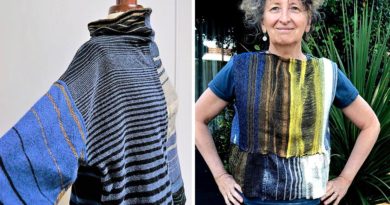
This newest baked scarf features lots of spindled singles yarn wound straight off the spindle to the bobbin. It washed up softly and I used a handdyed tencel and textured cotton warp, with wool, mohair, retro reflective yarn, cotton, lycra and silk in the weft. It is long enough to warp twice around the neck for an autumn weight.

The benefit of weaving straight from handspun singles are great:

1. Colours when spinning can be changed wherever you like using multiple slivers and fibre mixes, to create a dynamic coloured yarn for weaving. Blend any colour mix you like or dye your own sliver/fibre.

2. You have a say in the provenance and origin of the fibre. Aussies can choose Australian wool sliver or NZ wool straight up without all the airfrieght, etc. to other countries to process it for you. (Note to self: try not to publicly moan about our lack of mills) Others can ensure the fibre comes from their own obtainable local sources or sources that they favour.

3. You can wind a bobbin for weaving directly from the spinning wheel spool or the hand spindle. Not only a time saver but better for the spirit to see the immediate translation of the creation of yarn to cloth.

4. From one Bosworth Midi spindle I wound 3 full bobbins which went a very long way on the weave. What a pleasant and unexpected surprise.

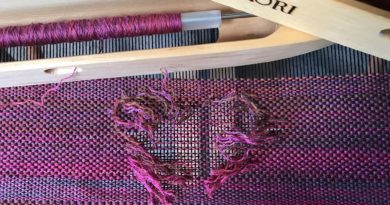
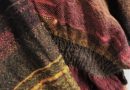
5. These yarns create a collapse weave on the textile when washed. This is a very exciting process because it seems almost magical! How did that yarn create such interesting furrows to appear instantly when I waved my wand handwashed it. This is an important personal enlightenment for me. I’ve read and experimented with collapse before but as colour is very important to me in my work the only options were really white collapse yarns which could only be dyed after the cloth was woven allowing no detailed colour surprises or graduations in the weave. This fact always prevented me from going any further with it.

The collapse effect of using handspun singles

6. I mixed a fine singles with another plyed fibre such as mohair and the collapse effect still worked. These were mixed at the bobbin winding stage.

7. Thrice the enjoyment in the development of the weave. Once for the spinning, twice for the weave, thrice for the wash result.

I could add that number 8 is the smug smile of success.

Note: if you are a beginner reading this I realise I’ve used weave terms to describe a process which might make it sound complicated. But this technique is readily available to a beginner and not intimidating in any way.

From spindle to bobbin

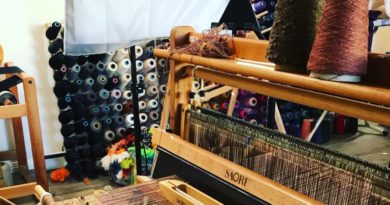
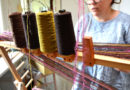
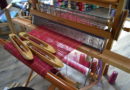
I’m so into weaving with singles at the moment that I just have to put them straight to work. Here you can see the Bossie spindle sitting on a large spool of yarn (aka spindle holder) and I’m winding it directly onto a bobbin on the Saori loom bobbin winder. Quick and easy, tidy and straightforward, getting spins to work for me.

Tencel warping


Working with 2/10 tencel and a textured cotton warp rewarded me be a lovely mix ready for threading. It’s 13 metres long which is about the extent of the Saori warping board that I used.  Threading it all up at my table then clipping it onto the loom made it easy, as usual, and the warp wound on pretty nicely too. Now to weave it off.

I’m in love…with a top whorl

How much greater is a love when you have denied it beforehand.

I’ve always spun on a low whorl spindle and reading recently that it is totally old hat and totally old fashioned just made me want to stubbornly hold onto my views more.

But reading Respect the Spindle, Abby Franquemont recommends at least trying a top whorl. I trust her – she owns tons of spindles. And anyway the top whorl’s huge popularity in America must have something going for it. But why?

So I ordered a Bosworth 29g Zebrawood top whorl spindle and I am utterly impressed by the comfort, quicker wind on, balance and ensuing yarn making process. I was worried about how I could manage spinning the stick rather than the whorl, but it was so intuitive and natural. I also didn’t like the sound of the cut in the whorl to place the yarn either, why would I need it? But once again, I was wrong and the cut mark helps to wind on quicker but more importantly adds significantly to the meditative flow of the whole process. I’m a total convert!

Sadly the English language lacks distinctive words for all the types of love we feel (it mustn’t be considered important). But I think love for a spindle deserves its own word. Can you think of one? I  SPLOVE. I SPLIN.


A remedy for the blues

Complete!

With button loop so it can be worn different ways…depending on mood of the hour.

-->