Feb 28 2010

Weave Sensing in 2010

Published by curiousweaver under Design, Handweaving

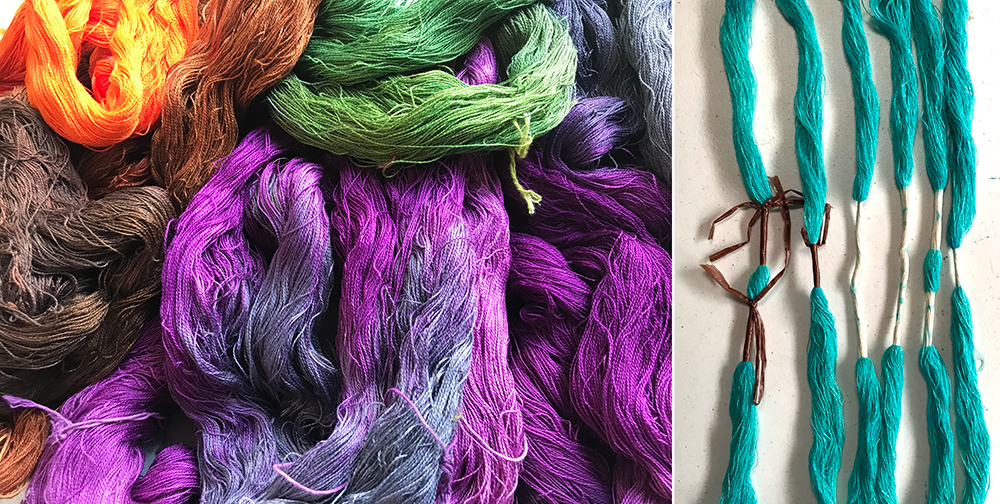
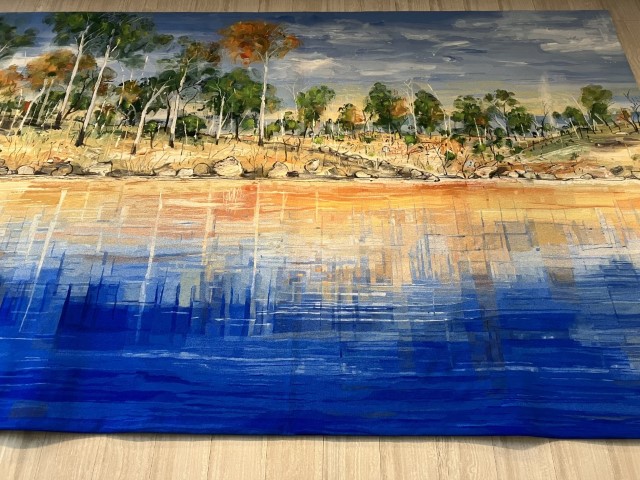
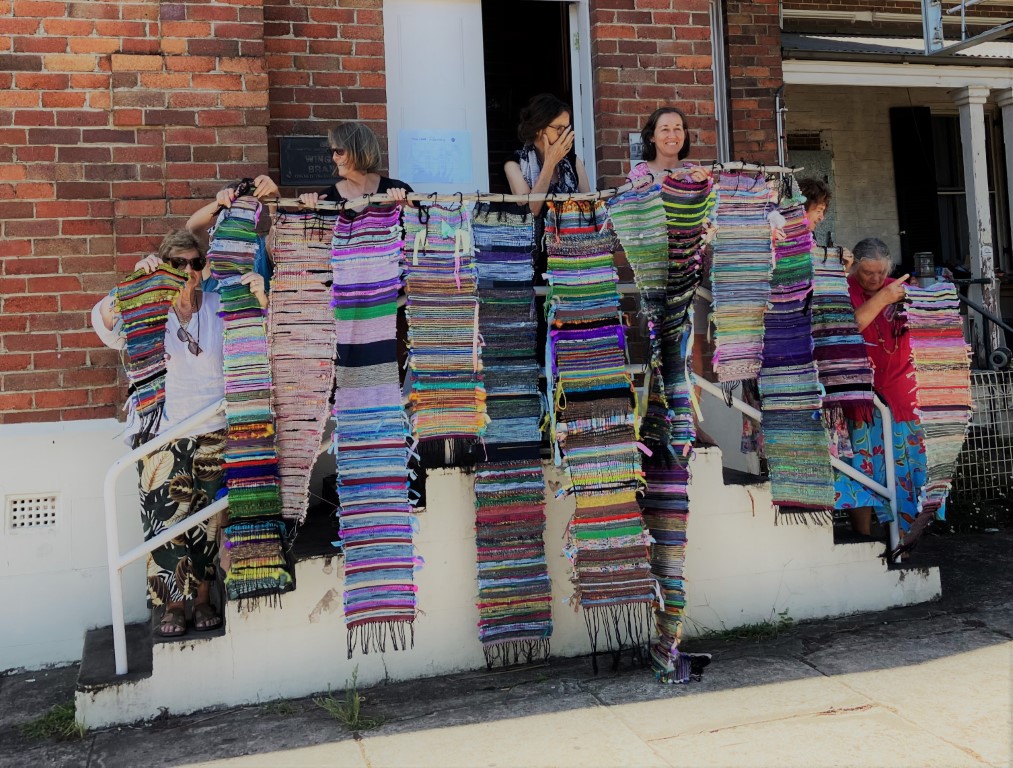
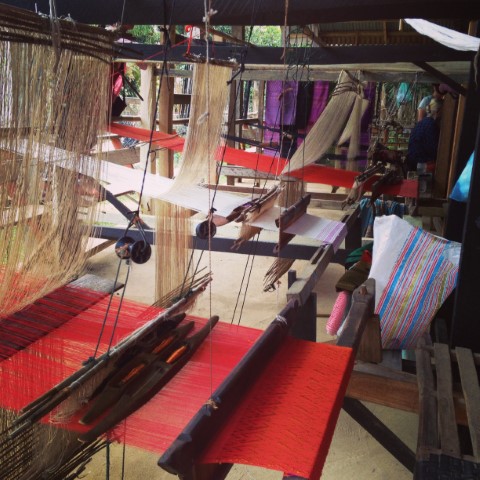
I’m in for Meg Nakagwa’s 2010 Weave Challenge.Above are the weave sense images I will be sending to another weaver, as yet undetermined. It doesn’t really matter why I choose these particular images as idea developers as the recipient will receive them in their own way based on their own living experiences….and how they relate this to their weave structures.

They are are mixture of feelings for me and structures I am drawn to;

Mandalas or circle drawings, and even the circle in general has always interested me. The way a centre radiates an energy bubbling with growth and reaching out like a web, but sometimes contained within the line with no beginning and no end. Even when the centre is merely a point or dot, it holds an enormous potential energy. There is so much to circles.

The plant is a banksia. This is an Australian plant species which combines whaky, edgy elements with elegance and sophistication. A pretty difficult act to pull off. Serrated leaves, sometimes huge powerful brush like flowers and seed pods that look like eyes…hence the story of the Banksia men.

The charcoal drawing by Kathe Kollwitz I find enormously emotional. See some more drawings here. The charcoal medium lends itself to sensual and emotional responsiveness but here the subject matter does too… mother and child. It’s so wonderful and I’ve not seen any other drawings by anyone of such powerful heart expression. In my view art, and music, create a shared human language to make a physical representation of what we can’t explain in ourselves.

Post update 12 March: WOOPS – apparently this isn’t motherly love at all but vampire love! who would have though. Please excuse my ignorance as I thought it was a mourning photo. How wrong can you be.

Lastly, Starry Night by van Gogh. A famous and very well known painting but one that uses a very limited colour range but achieves a mood very strongly.

Our challenge is to examine an image provided by another and create the design brief for a weave textile.I’m excitied about the challenge.

2 responses so far

Jan 20 2010

Wheeling to Warp & Bean

Published by curiousweaver under Handweaving

warping wheel

What a contraption! The AVL warping wheel is fantastic. So easy to understand and use.

This is the first time I’ve used this tool….and it’s a keeper.

Essentially, it allows you to warp and beam at the same time as long as you have a sectional warping beam. Mutiple yarn cones or even just one cone of yarn can be used which saves winding out many separate yarn packages. Rather than dragged to a chore, I actually looked forward to winding, like a game, as I saw the warp creeping along the warp beam so quickly.

I think I’ll also be able to use a variant of the warping process with painted warps but I’m just trialling it now. No doubt lots of weavers have already discovered how to do this. I hope to do a video soon.

On another note check out Meg’s 2010 Picture Challenge. Meg – where do you come up with such luscious exchange ideas? I’m going to commit to this one because I need a focus on designing new cloth and pushing my stash of yarns into living cloth. Meg has set out a great way to get those fibre juices activated.


2 responses so far

Jan 10 2010

A blanket for Casey – Complete!

Published by curiousweaver under Handweaving

Thanks to all who have offered such helpful and generous advice on my fly shuttle woes. I know I’ll get it going, but in the meantime I’ve finished the blanket that I was strugglying to weave just in time for the birth of my newest neice – Casey Eve – yay!

A nice blanket ribbon trim finished it off nicely and I’m really happy with it.

11 responses so far

Jan 08 2010

Textile Inspirations and Aspirations for 2010

If you’ve noticed by tardiness to my blog entries it’s because I’ve temporarily been seconded to the world of e-learning design. That is designing online courses. It  shares some similarities to textile design and processes. It’s a  weaving together of different medias, rather than yarns, to create something memorable and meaningful combined with function. I’m learning so much that my head is near exploding point.

As 2009 drew to a close my fly shuttle problems didn’t resolve themselves despite my very best efforts. You can see in this video some of the problems and workarounds I’ve used but to no avail. The fly shuttle should work more like this. Not by half pushing the shuttle through the weft each row. Any suggestions are greatly welcomed.

To soothe the weave issues I’ve had this year I had to order some new yarn to work with from Avril. These super fantastic quality Japanese yarns are so wonderful that I’ve run out of adjectives to describe their beauty. I have a kilo of the natural 2/20 linen which is so soft that it is unsuitable for a wall transparency and will be better in cloth to wear. Also some stainless steel yarn and a luscious cone of white pine yarn. Happy Weaving for 2010!

6 responses so far

Oct 25 2009

Warp Painting and Ikat in Melbourne

Published by curiousweaver under Handweaving

With another opportunity to run  a workshop with ‘live’ weavers  I was over the moon….and in Melbourne too. Double over the moon! Thanks to the weavers and especially Amanda  (and Mae) for being a most generous host.The workshop was fantastic. We focused on ways of warping with a horizontal warping mill, a vertical warping mill and a warping board using multiple cones of warp to speed up the process. Most of the weavers were or had studied at RMIT School of Textiles but had never had the opportunity to warp with multiple cones. To do this we needed a warping paddle or a rigid heddle to create the cross as the warp is wound. Very different handling techniques were needed with the different warping tools. I usually use a vertical warping mill so the other types were of interest to me too.

I am so motivated to continue in my craft by these types of workshops. I learn so much from other weavers as well. We started comparing tips and ways of doing things.

Could we improve this or that? Would this work in my situation, with my tools or would this be better? 

Most of the weavers used a guide string to measure their warps, something I’ve never done. Michelle even had coloured warping guides for different warp lengths.  I think I learnt more than I ‘taught’. I don’t believe you ever ‘teach’ adults because they are so full of experiences possibly quite different and more diverse than mine. I just try to be open to a learning exchange within this.

Here are photos of the warping, the dyeing and ikat tying and Amanda’s weave in progress and completed textile. Beautiful.


One response so far

Sep 14 2009

Inkling Workshop

Nikki - New Inkle WeaverThe Textile design and weave workshop was beyond great. It was so wonderful to have a group of students, even for such a short time,  that were excited by the prospect of learning how to create and design textiles for the first time. This is something I haven’t experienced for a while as I’ve been teaching subjects that aren’t so immediately hands on and creative like weaving. I didn’t even have to engage them as they were highly motivated and ’self primed’ when they got there!

Nikki, pictured here, designed, warped and completely wove off her first textile in the 4 hours, closely followed by all the other new weavers.
All the weavers wove the same design but used different colour selections, each full of vitality and individuality. Each wove a different self into the work, which was particularly rewarding to my teaching persona. What a way to see experiements and variations in colourways without doing it yourself.

The next workshop is on Saturday 14 November and I can cater for more advanced or experienced weavers too, if you let me know beforehand. For beginner everything is supplied for a small fee.

3 responses so far

Sep 08 2009

Sticky Inkle Textile Design


I’m teaching a Beginners Weave workshop with Inkle and Saori weaving at Adult Education in Taree on Thursday (10 September)  and wanted the participants to explore textile design in a quick, easy, taster sort of way. I thought about coloured pencils and paint but the restricted time of the workshop didn’t really suit this approach. So I opted for adhesive coloured board which is easy to find in the abundance of scrapbooking supplies.

Essentially I use cut strips of coloured card to represent stripes which are the basic building blocks of  all warp faced textile design such as those woven on an Inkle loom. These can be any colour or multiple gradings of the same colour or any width. It’s best to combine a number of different widths for visual interest.

The next basic building block is the horizontal bar. These bars alternate with 2 colours only i.e, black and white, and are created by threading one black, one white etc. These can be different widths and by doubling up on a colour in the middle of the bar you can interupt the bar, changing its look.

2 responses so far

Sep 07 2009

Learning Challenges – Weave and Music

Published by curiousweaver under Handweaving

This week has been a great learning challenge week.

Two new experiences; the fly shuttle on my Toika Loom and playing the three stringed Strumstick. Each came with their own enticing guarantee. The fly shuttle enables wide cloth to be woven which is beyond the normal human reach for the shuttle and the newly invented strumstick touts ‘no wrong notes and no talent required!’  The strumstick is beautiful but I still managed to get some ugly notes out of it. The fly shuttle is amazing but, like a musical instrument, it too requires the deft, subtle, skilled touch of experience.

I’m just shy of a metre woven with the fly shuttle and already the memory of my learning is leaving it’s mark.

As you can see in the montaged second photo, the mean looking metal tip of the fly shuttle has bashed repeatedly into the side of the right entry box. It has also occasionally flown off in high speed and  gouged  the wooden studio floor. I don’t mean to scare you off with all my adjectives of the process but people have been killed by these things. I’ve also photographed the string which propells the fly shuttle being worn off on the left side which helped the bashing process and eventually snapped off before the metre weave mark was reached. I was amazed at the damage I did in such a short time and the evidence of my uneven strength when pulling one side.

I had read that it could take a few days to get the skill of weaving with a fly shuttle so I’m prepared to do the time. I think this applies alot in weaving ….and music. You just have to enjoy the time to build skill.

10 responses so far

Sep 02 2009

Comfort Weaving

Published by curiousweaver under Handweaving

The recalcitrant warp from my pevious post became too twisted a short time after I began weaving.There wasn’t much I could do about it and I sadly had to cut it all down and wind off the warp of 11 metres. It is certainly wasteful but more frustrating to continue so sometimes you just have to cut your losses and get on with it.So with encouragement from my husband, I made myself immediately wind up a new warp with only 19 epi rather than 72 epi and get it on the loom. It’s also a great excuse to set up my new fly shuttle and get weaving.

I had alot of 6/1 wool with nice colours so decided to make a couple of woollen blankets in a standard twill weave design.

Part of what is holding me back is the growing demand that everyone has to develop their own unique patterns to weave with and the need to weave in new ways. I can’t always do this all the time and look to patterns of the past, guiltily. When I first started weaving this wasn’t an issue and I could weave all sorts of patterns and experiments using patterns I’d found in magazines and books gradually finding my own way of designing by standing on the shoulders of others. If it was up to me to think up the weave process or a pattern beyond plain weave it would never have been invented!


8 responses so far

Jul 29 2009

Weaving – at last

Published by curiousweaver under Handweaving

Coming through the reed, at last! I finally had a small slot of time to finish my gigantic double weave threading job and the threads started coming through the reed and forming the textile. It’s looking good. You can see the two layers of fabric here and the reed marks are quite prominent as I have 9 ends per dent on an 8epi reed which equals 72 dpi.Strangely, I had this real feeling of excitement as I was nearing the completion of the threading. Now I can settle back and weave. I’m really so busy with other work committments at the moment that I hardly get a chance to do anything but knit in odd moments. I have another niece on the way so all the knit patterns are out again.

Laverne - BackStrap Weaving

Laverne - BackStrap Weaving


Back Strap Weave Delights

On another note in relation to backstrap weaving, weaver Laverne has some wonderful photos of weaves,  process and teachers in her flickr site. She’s an Australian living in Bolivia and has the most wonderful exposure to specialist teachers.

Laverne says ‘ …I spend my time weaving traditional Andean designs on a backstrap loom. Every chance I get, I travel within Bolivia or to neighbouring Peru and Chile or farther afield to Ecuador or Guatemala searching for indigenous weavers to spend time with and learn about their weavings and techniques.‘ See more of her photos on Weavolution

2 responses so far

Next »

  • Search